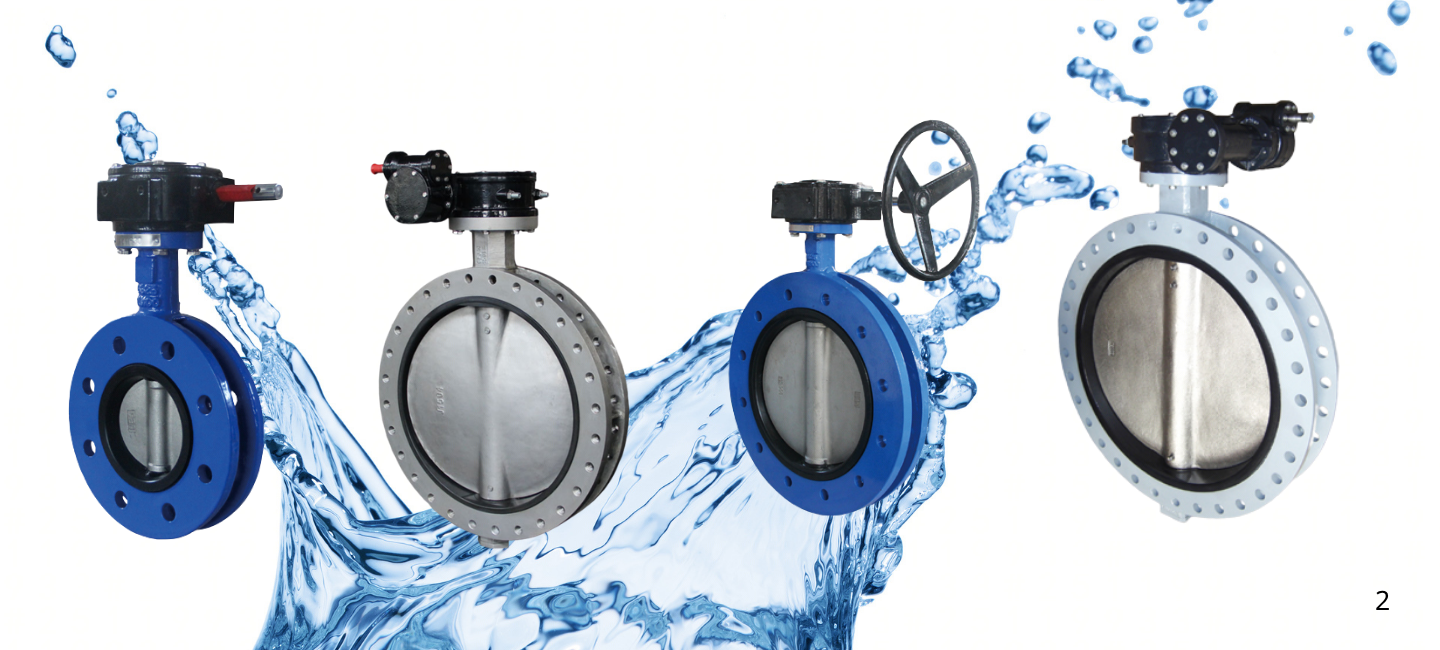
A U-type butterfly valve (also called a U-section butterfly valve or U-shaped butterfly valve) is a distinctive butterfly valve design characterized by its U-shaped body cross-section that accommodates a removable, full-face elastomer or polymer liner. The U-type body design creates a smooth, uninterrupted flow passage with no crevices, dead spaces, or exposed body metal. This hygienic design makes the U-type butterfly valve the standard choice for food and beverage processing etc
Introduction
A U-type butterfly valve (also called a U-section butterfly valve or U-shaped butterfly valve) is a distinctive butterfly valve design characterized by its U-shaped body cross-section that accommodates a removable, full-face elastomer or polymer liner. Unlike the vulcanized (bonded) seat design used in standard wafer and lug valves, the U-type valve's liner is a separate component that can be replaced in the field, making it a preferred choice for hygienic, food-grade, and chemical processing applications where media changeover, cleaning, or seat replacement is frequent.
The U-type body design creates a smooth, uninterrupted flow passage with no crevices, dead spaces, or exposed body metal. This hygienic design makes the U-type butterfly valve the standard choice for food and beverage processing, pharmaceutical manufacturing, biotechnology, and sanitary applications.
1. What Makes a U-Type Butterfly Valve Different?
The defining characteristic of a U-type butterfly valve is its body and liner design, which differs fundamentally from standard butterfly valves:
1.1 U-Shaped Body Cross-Section
As the name suggests, the valve body has a U-shaped internal cross-section (when viewed from the side). This U-channel serves as the mounting receptacle for the replaceable liner. Key features include:
- U-channel groove – A continuous U-shaped groove runs around the inside circumference of the body. The liner seats into this groove and is held in place by the compression of the pipe flanges.
- No bonded seat – Unlike AWWA C504 valves with vulcanized seats, the U-type liner is not chemically bonded to the body. It is mechanically retained, allowing easy removal and replacement.
- Full lug or wafer configuration – Most U-type butterfly valves are available in both wafer (through-bolt) and full lug (threaded insert) body patterns. The full lug pattern is most common in sanitary applications.
- Materials – Body materials include cast iron (ASTM A126), ductile iron (ASTM A536), cast steel (ASTM A216 WCB), and stainless steel (ASTM A351 CF8M). For sanitary and food-grade applications, stainless steel bodies with high-polish internal finishes (Ra 0.8-1.6 um) are standard.
1.2 Removable Liner Design
The liner is the heart of the U-type butterfly valve. It serves as both the sealing element (against the disc) and the flange gasket (against the pipe flanges).
- Liner functions – The replaceable liner performs three roles simultaneously: (a) body lining – isolates the body from the media, (b) seat – provides bubble-tight sealing against the disc edge, (c) flange gasket – seals against both mating pipe flanges.
- Liner materials – EPDM (water, food), NBR/Buna-N (oil, fuel), Viton/FKM (chemicals, high temp), PTFE/PFA (aggressive chemicals, high-purity), Silicone (high-temp food processing).
- Liner replaceability – The liner can be removed and replaced in the field without special tooling. This is the primary advantage over vulcanized seat valves – when the seat wears out, the liner is replaced rather than the entire valve.
1.3 Disc and Stem
- Disc – Typically made from 316 stainless steel (CF8M), polished to Ra 0.8 um or better for sanitary service. The disc edge is precision-machined for consistent interference with the liner seat.
- Stem – One-piece design with through-disc connection. Stem materials: 316 SS (standard), 17-4 PH (high strength), or other alloys.
- Stem seals – O-ring seals positioned outside the flow path to prevent media entrapment. Suitable for clean-in-place (CIP) and sterilize-in-place (SIP) cleaning cycles.
2. U-Type vs Standard Butterfly Valve — Key Differences
| Feature |
U-Type Butterfly Valve |
Standard Vulcanized Seat Valve |
| Seat Type |
Removable liner (mechanically retained) |
Vulcanized seat (chemically bonded) |
| Seat Replacement |
Yes – field replaceable without special tools |
No – seat is permanent; replace entire valve |
| Body/Media Contact |
Liner fully isolates body from media |
Seat lines the body, but body bore may be exposed |
| Hygienic Design |
Smooth flow passage, no crevices, CIP/SIP compatible |
Standard design, may have crevices at seat-body interface |
| Body Materials |
Cast iron, DI, cast steel, 304/316 SS (polished available) |
Cast iron, DI (standard); SS available |
| Flange Gasket |
Liner serves as integral flange gasket on both sides |
Integral sealing surfaces (may need separate gaskets for some flange finishes) |
| Dead-End Service |
Yes (lug pattern) – liner retention bolts hold liner in place |
Yes (lug pattern) – bonded seat retains integrity |
| Vacuum Service |
Good – liner is mechanically retained, resists vacuum pull |
Excellent – bonded seat cannot pull away |
| Typical Applications |
Food processing, pharma, biotech, sanitary, chemical |
Water, wastewater, HVAC, fire protection, general industrial |
3. How a U-Type Butterfly Valve Works
The operating principle of a U-type butterfly valve is the same quarter-turn (90 deg) mechanism as all butterfly valves. However, the liner sealing mechanism has unique characteristics:
3.1 Sealing Mechanism
- Disc-to-liner interference – When closed, the disc edge compresses against the elastomer liner. The liner material deforms elastically, creating a bubble-tight seal around the full circumference.
- Flange compression seals the liner in place – When the pipe flanges are bolted against the valve, the liner faces are compressed between the valve body and the pipe flanges. This compression serves two purposes: (a) it holds the liner securely in the U-channel, preventing rotation or dislodging, and (b) it creates the flange seal, eliminating the need for separate gaskets.
- Bi-directional sealing – The liner design provides bubble-tight shut-off in both flow directions, equal to vulcanized seat valves.
3.2 Liner Retention
The liner is retained in the body through a combination of design features:
- U-channel fit – The liner has a matching U-shaped cross-section that snaps into the body groove. The friction fit holds the liner in place when the valve is not installed.
- Flange compression – When bolted between pipe flanges, the liner flanges are compressed, preventing any movement.
- Retention pins (optional) – Some U-type designs include retention pins or screws that positively lock the liner in place, providing additional security for vacuum service or aggressive media.
4. Advantages and Limitations
Advantages
- Replaceable liner – When the seat wears, replace only the liner (typically 20-40% of the cost of a new valve). No need to remove the valve body from the pipeline.
- Media isolation – The liner completely isolates the body material from the process media. This allows a cast iron or ductile iron body to handle corrosive media (with PTFE liner) that would normally require an expensive stainless steel valve.
- Hygienic design – Smooth flow passage with no crevices, dead spaces, or metal-to-media contact. Suitable for clean-in-place (CIP) and sterilize-in-place (SIP) cleaning cycles at temperatures up to 150 deg C.
- No flange gaskets needed – The integral liner flanges serve as flange gaskets on both sides. Reduces installation time and eliminates gasket alignment issues.
- Multi-material flexibility – One body design can accommodate liners in EPDM, NBR, Viton, PTFE, Silicone, and other materials. A single valve body can serve multiple service conditions by changing the liner.
- Low inventory cost – Stock one body size and multiple liner materials instead of stocking multiple complete valves.
Limitations
- Lower pressure rating – U-type valves are typically rated for Class 150 (275 psi) maximum. The removable liner design is not suitable for higher pressure classes where vulcanized or metal seats are required.
- Liner extrusion risk – Under high pressure or vacuum, the liner may extrude or deform if the U-channel retention is insufficient. High-quality U-type designs use enhanced retention features to mitigate this risk.
- Temperature limited by liner – Maximum temperature is lower than vulcanized seat designs for the same elastomer material because the liner is not bonded and may shrink or soften at elevated temperatures.
- Higher initial cost – U-type valves typically cost 10-20% more than standard wafer or lug valves of the same size due to the more complex body casting and replaceable liner design.
- Long-term liner creep – Over many years, the elastomer liner may take a compression set, requiring retorquing of flange bolts or liner replacement.
5. Common Applications
5.1 Food and Beverage Processing
U-type butterfly valves are the standard quarter-turn valve in food and beverage plants. Applications include: dairy processing (milk, cream, yogurt lines), brewery and beverage (beer, wine, juice, soft drink transfer), food processing (soups, sauces, vegetable oils, edible fats), and confectionery (chocolate, syrups, liquid sugar). White EPDM or Silicone liners with 316 SS polished bodies are standard. These valves meet FDA 21 CFR 177.2600 requirements for repeated food contact.
5.2 Pharmaceutical and Biotechnology
In pharmaceutical manufacturing, U-type valves are used for: purified water (WFI) distribution loops, buffer and media preparation tanks, fermentation feed lines, clean-in-place (CIP) return lines, and product transfer between process vessels. Stainless steel bodies with Ra 0.5-0.8 um internal finish and PTFE or EPDM liners are specified to meet cGMP requirements.
5.3 Chemical Processing
For chemical service, U-type valves with PTFE/PFA liners handle aggressive acids (HCl, H2SO4, HNO3), caustic solutions (NaOH, KOH), solvents, and chemical intermediates. The PTFE liner isolates the ductile iron or steel body from chemical attack, providing the corrosion resistance of a fully lined valve at lower cost than alloy construction.
5.4 Water and Wastewater Treatment
Standard EPDM-lined U-type valves are used in water treatment chemical dosing systems (coagulant, flocculant, polymer feed lines), lime slurry handling, and sodium hypochlorite (bleach) injection where chemical compatibility and seat replaceability are valued.
5.5 Cosmetics and Personal Care
In cosmetics manufacturing, U-type valves handle lotions, creams, shampoos, and other personal care products. The smooth liner surface prevents product buildup and enables thorough cleaning between batches.
6. Industry Standards
| Standard |
Relevance |
| API 609 Category A |
Concentric butterfly valves; U-type design falls under Category A |
| ISO 5752 / EN 558 |
Face-to-face dimensions (Series 20 short pattern for wafer and lug) |
| FDA 21 CFR 177.2600 |
Rubber articles for repeated food contact (liner materials) |
| USDA 3-A Sanitary Standards |
Sanitary design for dairy and food equipment |
| ASME BPE (Bioprocessing Equipment) |
Sanitary valve design for biopharmaceutical applications |
| EN 1092-2 / ASME B16.5 |
Flange drilling standards for lug and wafer patterns |
7. Selecting the Right U-Type Butterfly Valve
- Confirm U-type design is appropriate – Is seat replaceability important? Is media isolation from the body required? Is hygienic/food-grade design needed? If yes, U-type is the right choice. For general water service with no planned seat replacement, a vulcanized seat valve is more economical.
- Select body material – Cast iron or ductile iron for general service (protected by liner). Cast steel for higher strength. 304/316 stainless steel for corrosive environment or hygienic service where polished surfaces are required.
- Select liner material – Based on fluid compatibility and temperature. EPDM (water, food, -20 to 90 deg C), NBR (oil, fuel, -10 to 70 deg C), Viton (chemicals, -10 to 150 deg C), PTFE (aggressive chemicals, -20 to 200 deg C), Silicone (food, high temp, -40 to 180 deg C).
- Confirm liner compliance – For food/pharma: FDA 21 CFR 177.2600 or USP Class VI certification. For potable water: NSF 61 or WRAS.
- Determine body pattern – Wafer (through-bolt) for continuous pipelines. Full lug (threaded inserts) for dead-end service, terminal isolation, or where downstream pipe removal is needed.
- Verify face-to-face dimension – U-type valves typically follow EN 558 Series 20 (short pattern) for wafer/lug types. Confirm face-to-face matches existing flange spacing for retrofit installations.
- Select operator type – Lever handle (2-12 in), gear operator (8-48 in), or pneumatic/electric actuator. For sanitary applications, choose a clean-design operator with smooth surfaces and no exposed threads.
- Consider cleaning requirements – For CIP/SIP applications, confirm the valve body and liner materials can withstand the cleaning temperature and chemical exposure. PTFE and Silicone liners are preferred for high-temperature CIP cycles.
8. Frequently Asked Questions
What is a U-type butterfly valve?
A U-type butterfly valve is a valve with a U-shaped body cross-section that accommodates a replaceable elastomer or polymer liner. The liner serves as both the seat (sealing against the disc) and the flange gasket (sealing against the pipe flanges). The design is prized for its hygienic flow passage, media isolation from the body, and field-replaceable seat.
What is the difference between U-type and standard butterfly valves?
The key difference is the seat design. Standard butterfly valves (AWWA C504 / API 609) typically have a vulcanized (chemically bonded) rubber seat that is permanent. U-type valves have a mechanically retained, replaceable liner. U-type valves offer better hygienic characteristics, easier seat replacement, and complete media isolation from the body, but are limited to lower pressure ratings (Class 150 maximum).
Can a U-type butterfly valve be used for food processing?
Yes. U-type butterfly valves with FDA-compliant liner materials (white EPDM, Silicone, PTFE) and polished 316 SS bodies are widely used in food and beverage processing. They meet FDA 21 CFR 177.2600 requirements for repeated food contact and are suitable for CIP/SIP cleaning.
How long does a U-type valve liner last?
Liner service life depends on operating frequency, temperature, media chemical compatibility, and system pressure. In typical food processing service (daily cycling, near-ambient temperature, clean media), liners typically last 3-7 years before replacement is needed. In aggressive chemical service at elevated temperatures, liner life may be 12-24 months.
Can the liner be replaced without removing the valve from the pipeline?
Yes. This is a key advantage of the U-type design. To replace the liner: (1) close the valve, (2) relieve system pressure, (3) unbolt the pipe flanges from the valve, (4) remove the old liner from the U-channel, (5) install the new liner, (6) rebolt the flanges. The valve body remains in the pipeline. Replacement takes approximately 15-30 minutes for most sizes.
What is the pressure rating of a U-type butterfly valve?
Standard U-type butterfly valves are rated for ASME Class 150 (275 psi / 19 bar at 38 deg C). Some designs are available for Class 300 but this is less common. The removable liner design inherently limits the maximum pressure compared to vulcanized seat or metal seat designs.
What is the maximum temperature for a U-type butterfly valve?
Temperature is limited by the liner material: EPDM (90 deg C), NBR (70 deg C), Viton (150 deg C), PTFE (200 deg C), Silicone (180 deg C). For CIP cleaning cycles, brief exposure to higher temperatures (up to 150 deg C for PTFE) is typically acceptable.
Contact Laux Valve
For pricing, liner compatibility data, dimensional drawings, or engineering assistance selecting the right U-type butterfly valve for your application:
Email: james@lauxvalve.com | Tel: +86 18920833829 | Website: www.lauxvalve.com


